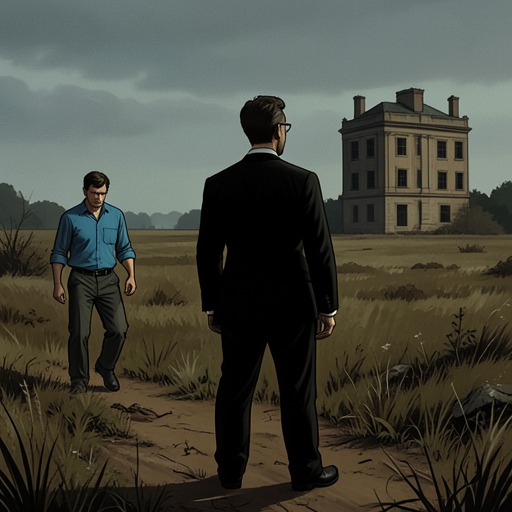
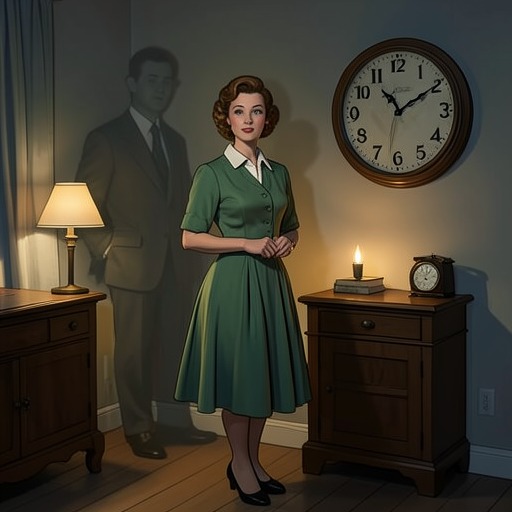
Concetta's Final Exchange with Dan
Doctor SleepConcetta Reynolds’s final exchange with Dan Torrance is both a bedside farewell and a freely given transfer of help: she returns briefly to consciousness, recognizes Dan, and agrees to give him what Abra Stone needs before he waits with her for her last breath. The scene makes their intimacy tangible through a handclasp, a rosary, and the image of a well, while presenting dying not as an interruption of relationship but as a passage shared between the living and the departing.
Room Nine and the return
Concetta lies in Room 9, at the end of the hospital hall. Her name is on the door, but the slot for medical orders is empty and the monitor offers no hopeful signs. Dan recognizes the hospital’s air freshener and antiseptic, as well as the sharper smell of mortal illness, which seems to sound in his head like a violin limited to one note. The room’s photographs preserve another register of life: many show Abra at different ages, and one recalls the famous birthday gathering known as the Day of the Spoons. The contrast between those images and Concetta’s failing body places the family’s history around her bed even as her life nears its end.
Concetta is described as a skeleton-thin woman, her once olive-toned skin yellowed, her remaining hair nearly lost against the pillow. A saline drip is the only treatment entering her body; Dan knows the hospital pharmacy has nothing that can reverse what is happening. He straightens her displaced cannula and takes her hand. When her breathing catches, he silently calls her back, thinking of Abra’s need and of his own wish that Concetta return. Her eyes move beneath their bruised lids, then slowly open. Their first vacant look gains perception, a change Dan recognizes as the miracle of consciousness returning. The scene holds the uncertainty of that moment: he cannot explain where consciousness comes from or where it goes, and he regards death as no less miraculous than birth.
Recognition and the bargain
Concetta’s hand tightens around Dan’s, and she smiles timidly. She asks, in Italian, whether he is Daniel Torrance and whether they are both dead, as if the encounter has already crossed the ordinary boundary between life and death. Their conversation is brief and illuminating. She speaks mostly in Italian, and at last raises a hand with effort to caress his stubbly cheek. The gesture makes recognition physical: after waking into a room of illness and family photographs, she confirms their bond through touch.
Dan asks whether she is ready. Concetta answers that she is. He tells her there is nothing to fear, and she calls him a gift from God. He hopes she is right, then asks whether she will give to him what he needs for Abra. Concetta agrees. The exchange is not framed as an order or a taking: her consent comes plainly, and Dan answers with a promise to give to her as well. His image of the two of them drinking from the well together makes their agreement reciprocal, even though she is the one approaching death and he is the one who will carry help back to Abra.
Concetta closes her eyes. Dan assures her that she will sleep and wake to find things better; she answers inwardly that she knows. The strength between them is greater than what Dan felt when Charlie Hayes died. As he gently clasps both her hands, the smooth pebbles of her rosary press against his palms. The rosary is at once a concrete object between them and part of the scene’s quiet devotional language: the exchange joins touch, faith, and the power Dan experiences without making his uncertainty about consciousness disappear.
The well and the life passing through
As their connection intensifies, the scene moves through images of Concetta’s life rather than reducing her to the body in the hospital bed. Dan senses lights being turned off one by one, while the image of a little girl in a brown dress and sandals draws water from a cool well in Italy. She resembles Abra. A dog barks and rolls in the grass; the remembered words identify it as Ginata. The well returns the reader to the promise Dan has made, but now it belongs to a landscape and a life extending beyond the hospital room.
Concetta appears across different ages and circumstances: sixteen and in love; thirty, writing a poem at a kitchen table in a hot Queens apartment while children shout below; sixty, standing in the rain and looking up at falling lines of silver. She is also her mother and her great-granddaughter. These shifting images do not provide a full account of her biography, but they make her identity larger than the final illness visible to Dan. Her approaching death is described as a great change and a great voyage, while the earlier well image gives that passage a continuity of memory, kinship, and renewal.
Dan kisses her cool forehead and tells her she only needs to sleep. He then waits. The intimacy of the scene is measured by its stillness: the hands remain joined, the final reassurance has been given, and nothing can replace the wait for the breath itself. Concetta’s last breath comes. Dan is still holding her hands when Lucy Stone enters, followed by her husband and Abra’s pediatrician. The arrival of the family breaks the quiet bedside vigil and brings the scene’s private exchange back into the urgent, painful world of those left behind.
Death, gift, and the novel’s rituals
The exchange is significant because it distinguishes a freely given passage of help from the True Knot’s predatory idea of nourishment. At the Kozy Kampground, Rose the Hat opens a canister of steam taken from Richard Gaylesworthy, and the gathered True breathe it in under the command to take nourishment and endure. The mist descends over their heads; some swoon, and Rose feels physically renewed. The child’s essence is consumed until it is gone. Concetta’s agreement with Dan also concerns an exchange of power, but the scene centers consent, reciprocal care, and the needs of Abra rather than a group’s appetite. Its well is shared, not harvested.
The book also surrounds death with collective ritual. After Grampa Flick dies, Mo breaks into sobs, others begin to chant, and Rose finds Crow’s hand and squeezes it before joining the words, “Lodsam hanti, we are the chosen ones.” At the fifteen-year sobriety anniversary meeting, Casey gives Dan his medallion and folds him into a hug, turning recognition of survival into a public act of fellowship. Concetta’s final exchange is quieter than either scene, but it belongs to the same wider concern with what people do at thresholds: how they touch, speak, grieve, or give when a life is changing or ending. Here the decisive act is Dan’s presence and Concetta’s willing gift. Her death closes the bedside conversation, but what she gives is bound to the continuing life of Abra and to Dan’s promise that they will drink from the well together.